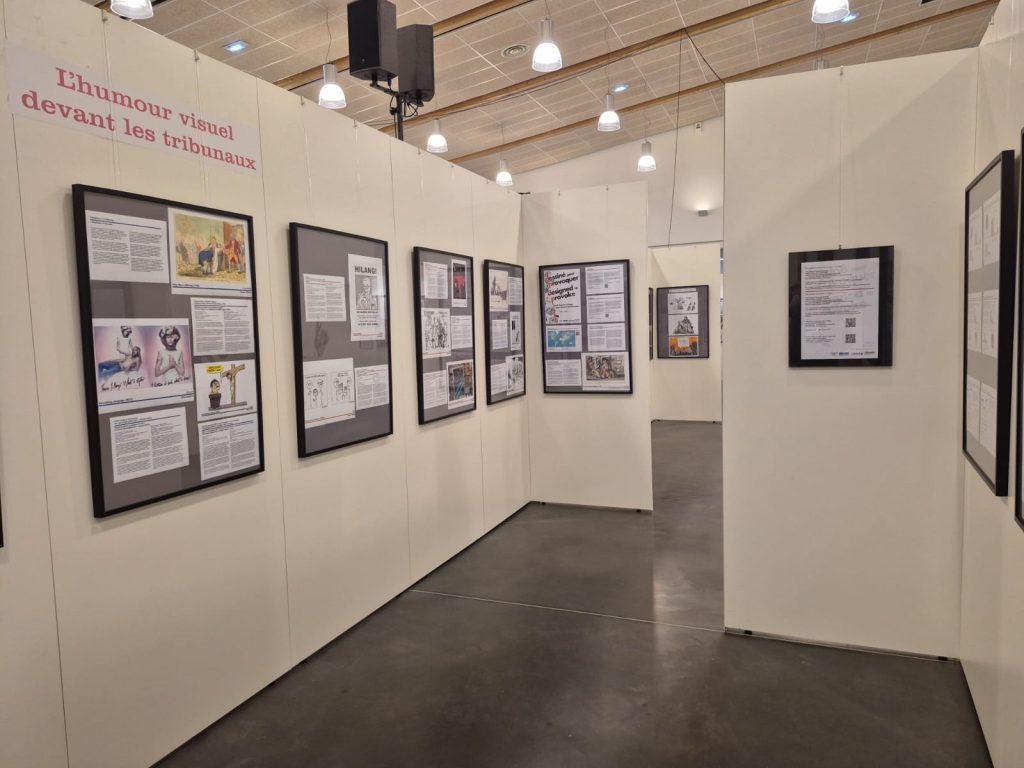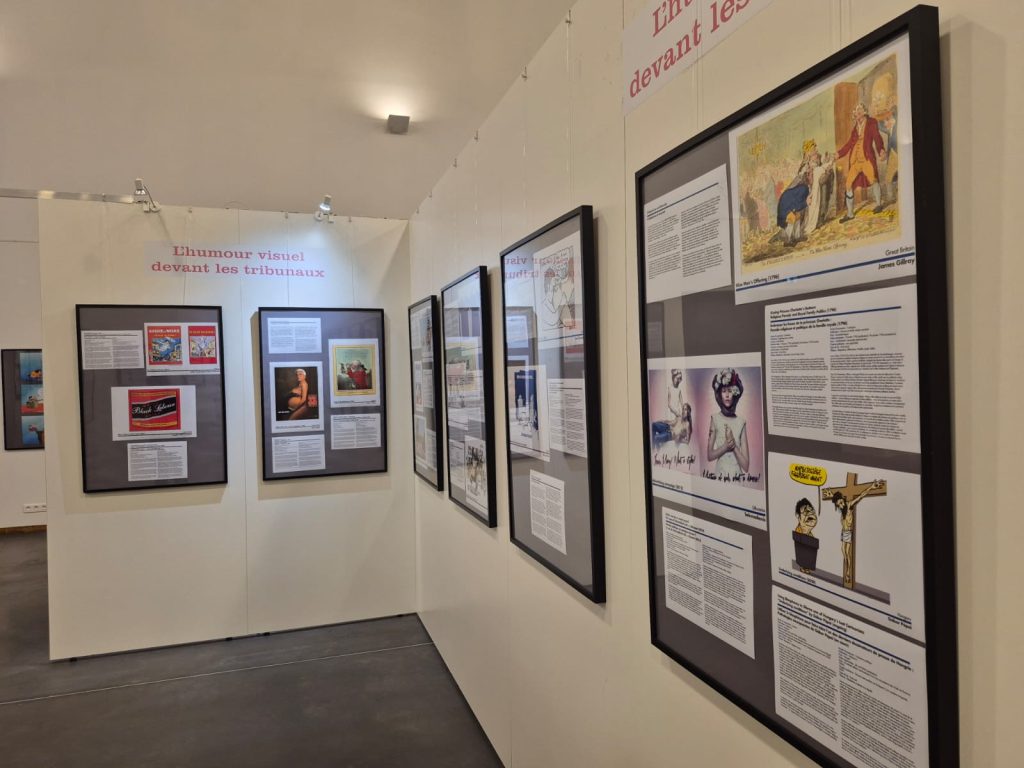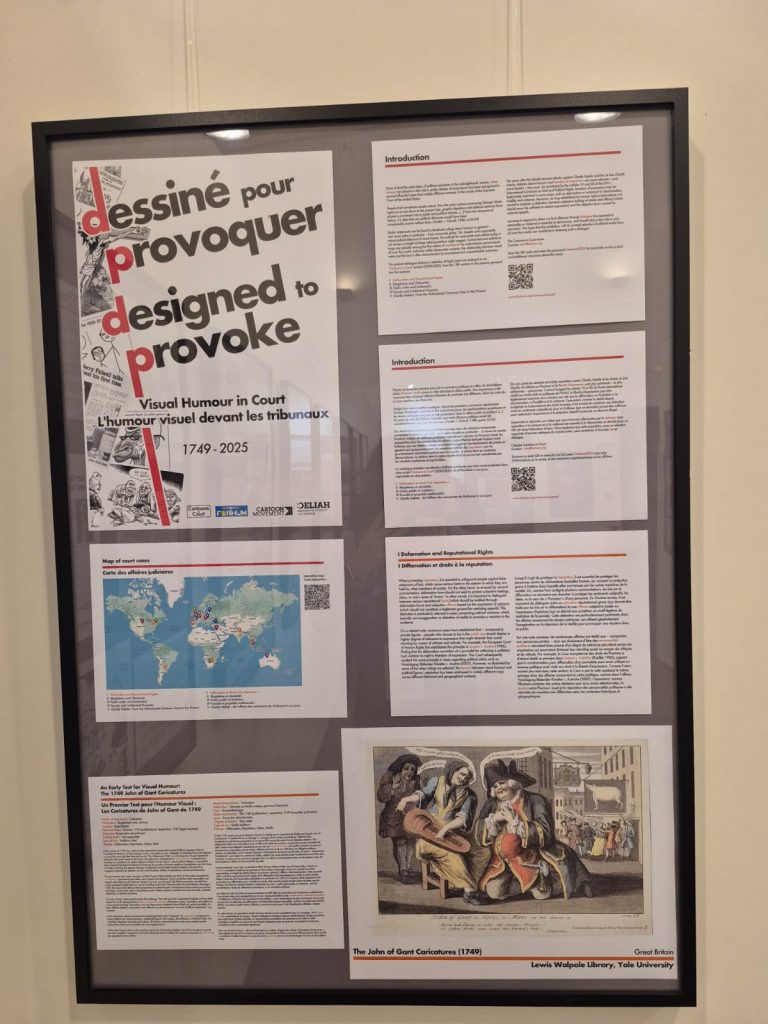
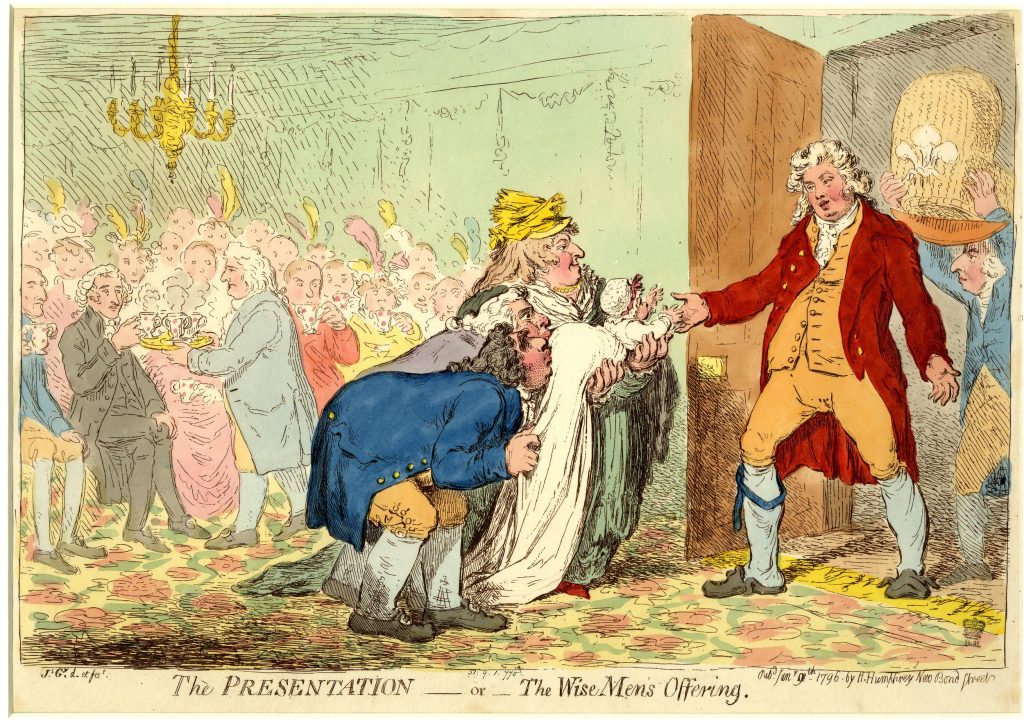
We are happy to report that the traveling exhibition Designed to Provoke: Visual Humor in Court, 1749-2025 was officially launched at the 44th International Salon of Caricature, Press Cartoon and Humor in Saint-Just-le-Martel, France from September 27 to October 5, 2025. The exhibition is part of the Cartoons in Court project (NETIAS Constructive Advanced Thinking Grant, 2020-2025) and is co-sponsored by the Forum for Humor and the Law, DELIAH: Democratic Literacy and Humour, Cartoon Movement, and the Public Engagement Seed Fund of the University of Groningen. It will be accompanied by an open access catalogue to be published in 2026 by Groningen University Press. The Cartoons in Court team includes Alberto Godioli (University of Groningen, coordinator), Vicky Breemen and Kelly Breemen (Utrecht University), Andrew Bricker (Ghent University), Ana Pedrazzini (Conicet – Comahue National University), and Tjeerd Royaards (Cartoon Movement).
Designed to Provoke will soon embark on an international tour, including stops in the Netherlands, Italy, the United Kingdom, Belgium and the United States. Stay tuned for more updates! If you are interested in hosting the exhibition at your University/institution, please email us at info@forhum.org.
A few words about the project:
Since at least the early days of political caricature in the mid-eighteenth century, visual humor has played a vital role in public debate. Its importance has been recognized in several influential cases from widely different contexts. In the words of the Supreme Court of the United States:
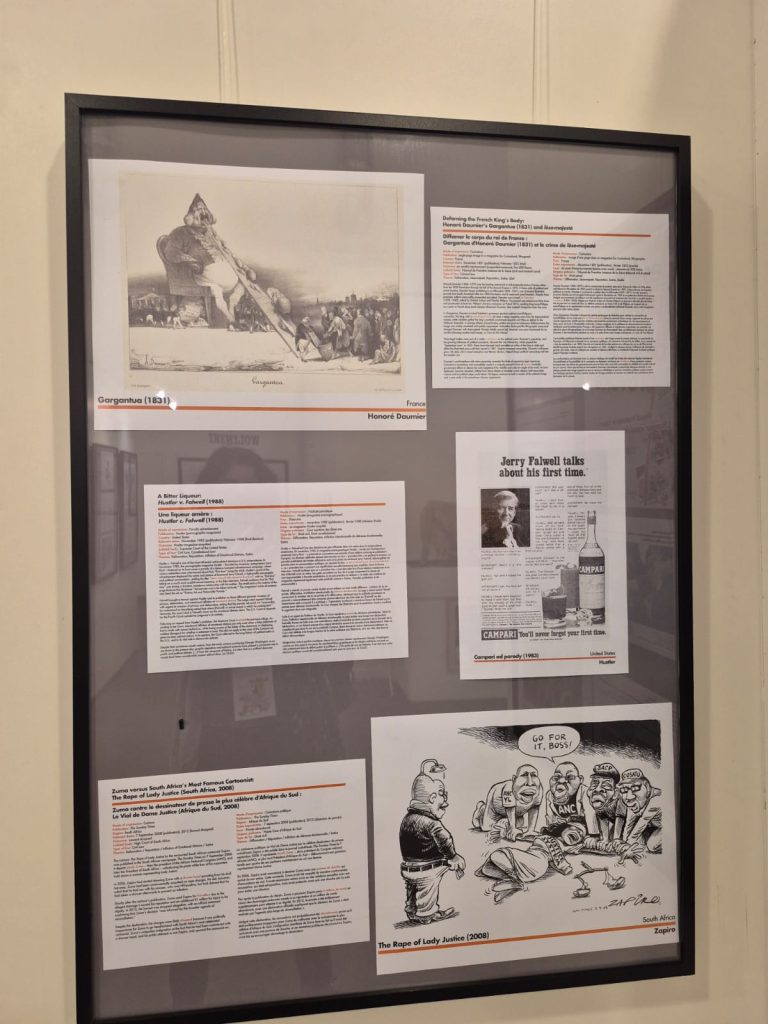
Despite their sometimes caustic nature, from the early cartoon portraying George Washington as an ass down to the present day, graphic depictions and satirical cartoons have played a prominent role in public and political debate. […] From the viewpoint of history, it is clear that our political discourse would have been considerably poorer without them. (Hustler v. Falwell, 1988, at 53-55)
Similar statements can be found in landmark rulings about humour in general – and visual satire in particular – from across the globe. Yet, despite such supposedly robust judicial defences of visual humor, the outlook for cartoonists and satirists today is not as bright as these initial quotations might suggest. Cartoonists and satirists at large are typically among the first victims of crackdowns by authoritarian governments all over the world; and even within democratic contexts, the relationship between visual satire and the law is often characterized by inconsistent and unpredictable outcomes.
Designed to Provoke features a selection of legal cases from the 18th century to the present, grouped into five sections:
- Defamation and Reputational Rights;
- Blasphemy and Obscenity;
- Public order and Incitement;
- Parody and Intellectual Property;
- Charlie Hebdo: From the Muhammad Cartoons Case to the Present
Ten years after the deadly terrorist attacks against Charlie Hebdo, debates about humour and freedom of expression are more relevant – and more heated – than ever. As mandated by Articles 19 and 20 of the UN’s International Covenant on Civil and Political Rights, freedom of expression may be legitimately restricted in some cases, such as defamation or incitement to discrimination, hostility and violence. However, as long established by human rights jurisprudence, it is crucial to maintain a distinction between subjective feelings of shock and offence (which should never be sufficient to restrict expression) and the objective harm caused by unlawful speech. In the former case, learning to respond to ideas we find offensive through dialogue, counterspeech and awareness-raising (as opposed to censorship) is essential to democracy, and should play a key role in civic education. We hope that this exhibition, with its curated selection of satirical works from all over the world, can contribute to fostering this principle.
The Cartoons in Court team
Contact: info@forhum.org
Some pictures from the Saint-Just exhibition