
Véronique Noel (Cassou), painter
We are glad to publish this text by French artist Cassou, reflecting on the role of humour in her series of paintings about the law.
“Caresses aux vieux démons”
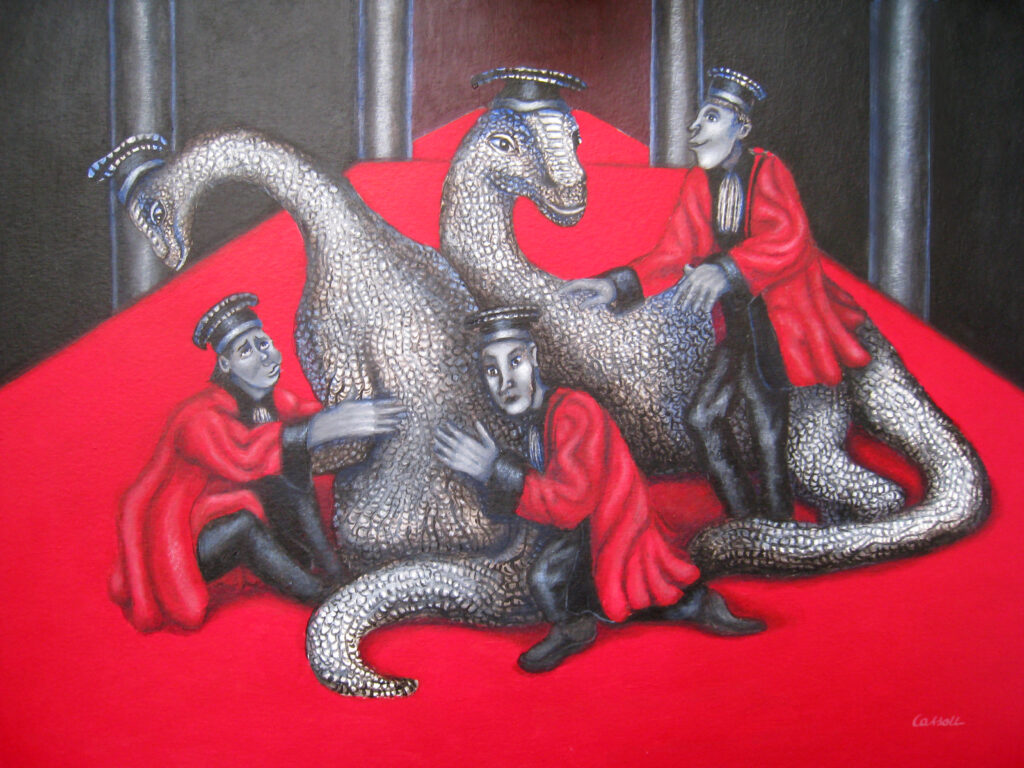
In my painting “Caresses aux vieux démons,” I use humour as a powerful tool for desacralizing the Practice of Law. By depicting judges in robes affectionately caressing dinosaurs, I create a burlesque visual juxtaposition. This laughter, far from being mere superficial mockery, becomes a philosophical lens through which to question the solemnity and rigidity of the judicial system. The Law is traditionally defined by its gravity, its immutable rituals, and its hermetic language. I introduce humour by bringing surrealism into this sanctuary: the dinosaurs embody legal flaws, obsolete procedures, and conservatism. By showing judges taming these prehistoric monsters, the humour underscores the paradox of a modern justice system that sometimes clings to anachronistic codes. The laughter arises from this discrepancy between the official majesty of the black or red robes and the tender absurdity of the situation. However, this humour is never cruel; it stems from a benevolent irony and a humanistic indulgence. By humanizing the guardians of the law through the lens of comedy, I remind us that behind the mask of State authority lie human beings with their flaws and their “old demons.” Shared laughter defuses the austerity of the courtroom, transforming it into a grand, jubilant theatre. Humour here allows for a subtle and redemptive critique, reconciling the citizen with the necessary but fragile justice of humankind.
“Emotions et l’avocate flegmatique”
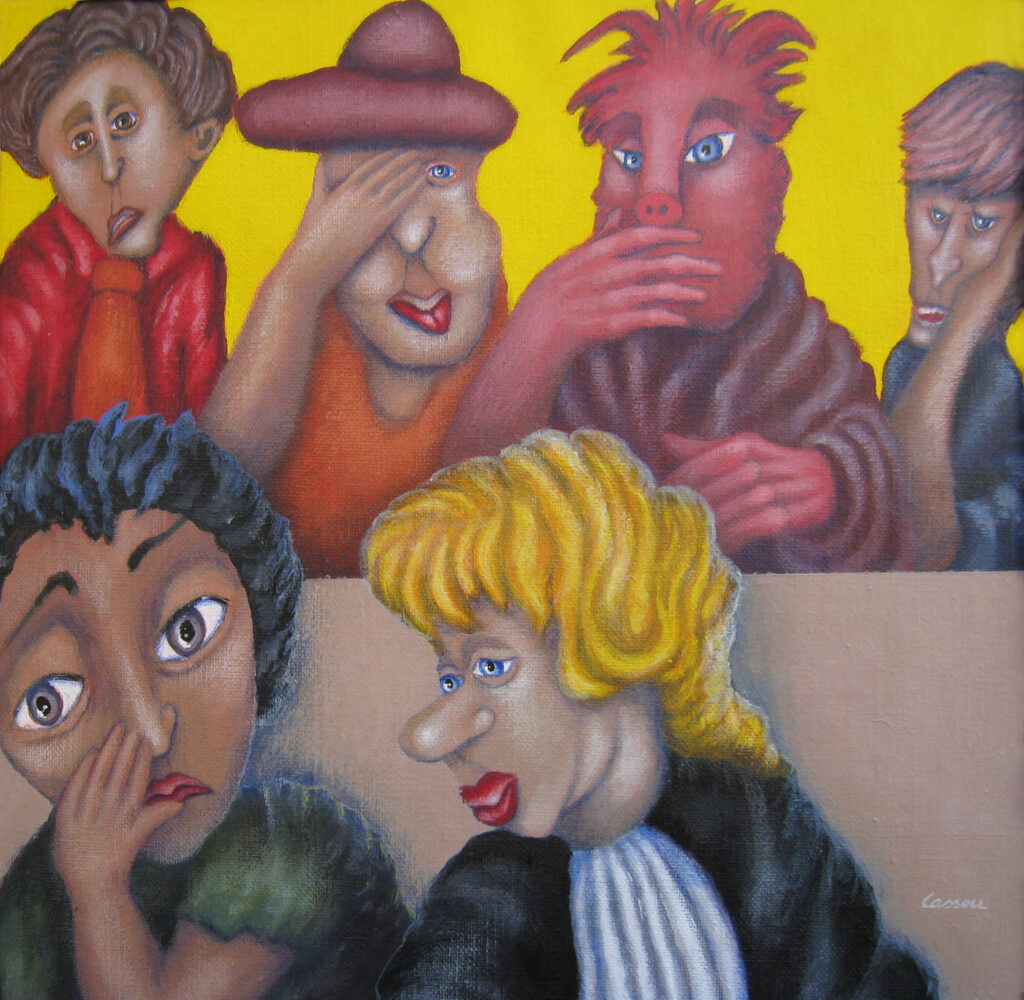
In “Émotions et l’avocate flegmatique” I use humour to expose the emotional gulf between citizens and the law. The painting relies on a striking comic contrast: a completely unfazed, stoic lawyer surrounded by deeply distressed clients. This absurd gap acts as a satirical metaphor for the professional distance required by the legal system. While the law demands rationality and cold logic, I highlight the comedy of this posture. Amidst tears and chaotic gestures, the lawyer stands like a marble statue in a storm. The humour stems from this clash between raw human tragedy and rigid legal translation. Far from a cruel critique, this visual irony is a tender caricature of professional defense mechanisms. Through laughter, I defuse the tension of the courtroom and turn deep distress into a jubilant comedy of manners. The artwork reminds us that while law tries to codify human passions, it cannot contain them, leaving lawyers as the phlegmatic spectators of human emotion.
“Haute tension”
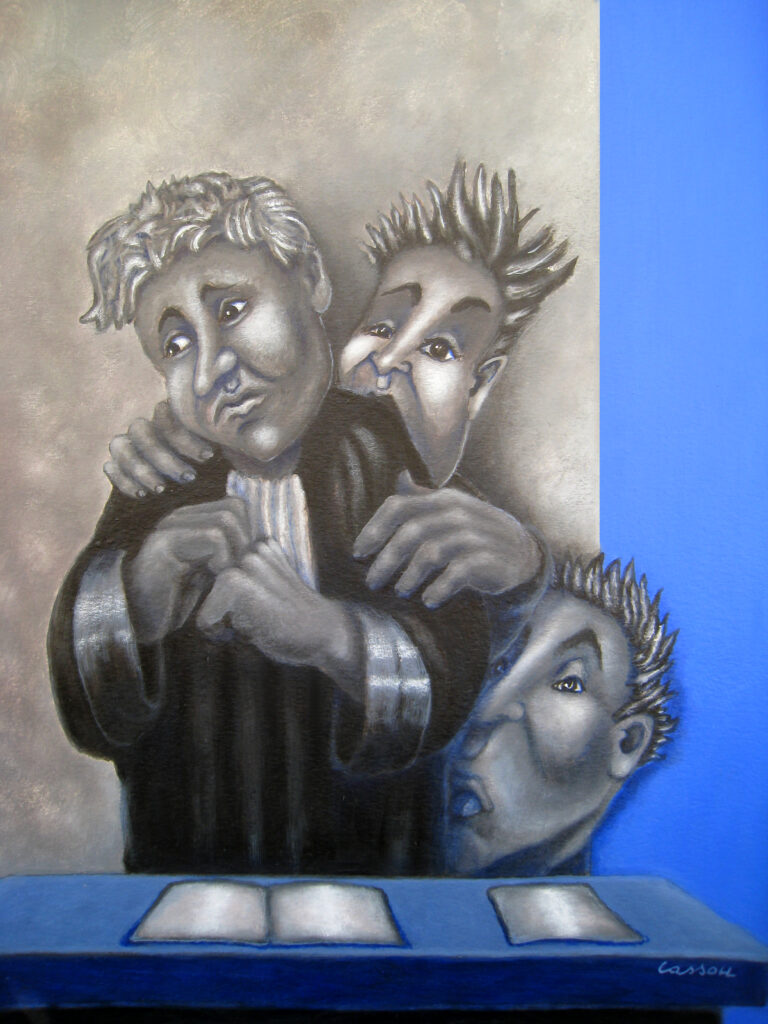
Here humour is used to expose the grand bluff of judicial uncertainty. The scene is comically tense: two terrified clients seek refuge behind their lawyer, completely unaware that he is just as uncertain about the trial’s outcome as they are. This absurd gap between the clients’ blind faith and the professional’s hidden doubt creates a sharp satire of legal theatre. While the law projects an image of absolute certainty and protection, I subvert this through dark situational humour. The lawyer serves as a human shield and an authority figure, yet he is navigating completely blind. He is turned into a poker player or a tightrope walker, forced to maintain a confident facade to keep up the illusion of control under the “high tension” of an unpredictable verdict. Through this caricature, I highlight the heavy burden of courtroom performance. Humour allows me to defuse the real anxiety of litigation, turning absolute uncertainty into a jubilant comedy of manners.
“L’avocate convaincante”
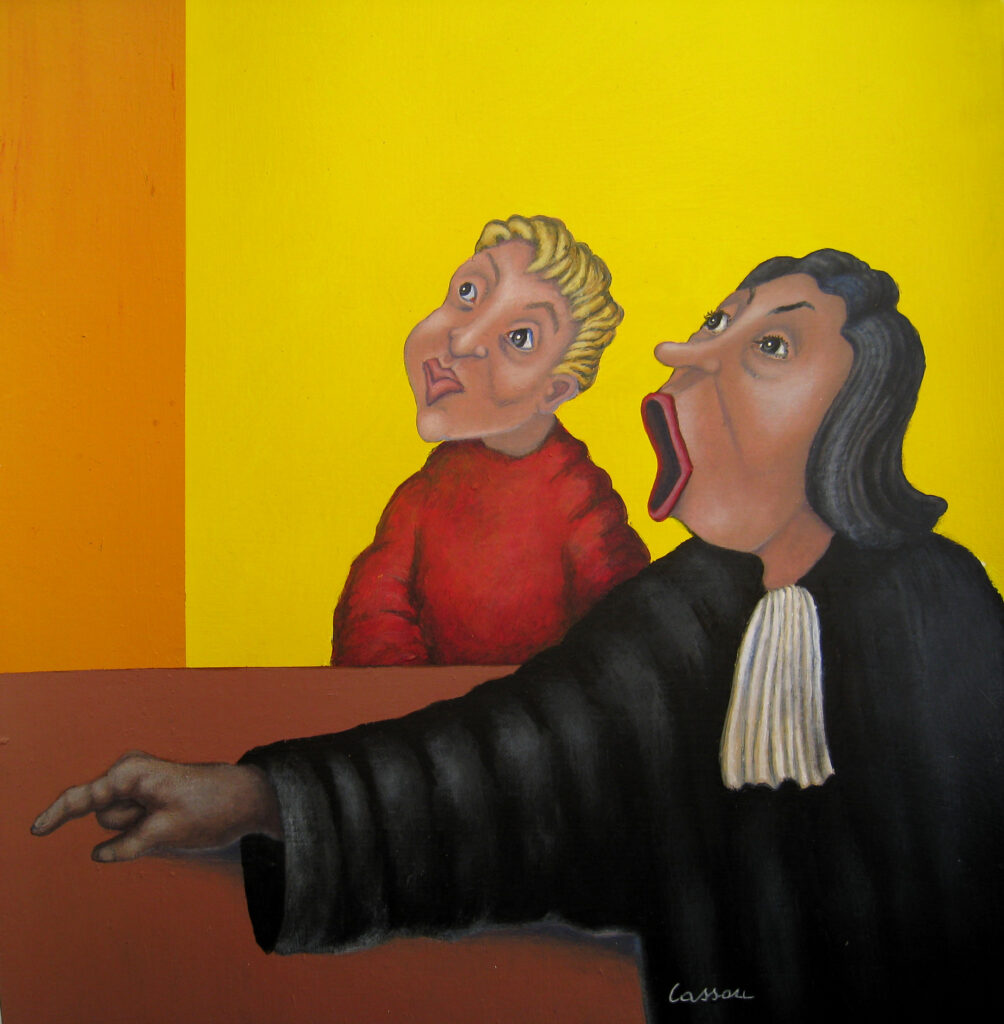
The humour comes from the visual and psychological contrast between the terrifying weight of the justice system and a completely unfazed child, shielded by a brilliant lawyer. The lawyer’s eloquence transforms cold, scary legal jargon into a protective force field. The austere black gown is instantly upgraded into a superhero cape. The lawyer achieves the rarest feat in the judicial system: making a courtroom feel as safe and welcoming as a playground. Reassured by his lawyer, the child looks the judge straight in the eye with absolute serenity. The judge, used to making hardened adults tremble, finds himself utterly destabilized by this calm, innocent gaze. Ultimately, the humour lies in the failure of judicial solemnity. All the formal procedures, high benches, and strict rituals are rendered useless by a combination of childish innocence and masterful advocacy.
“Juges, la tête en l’air”
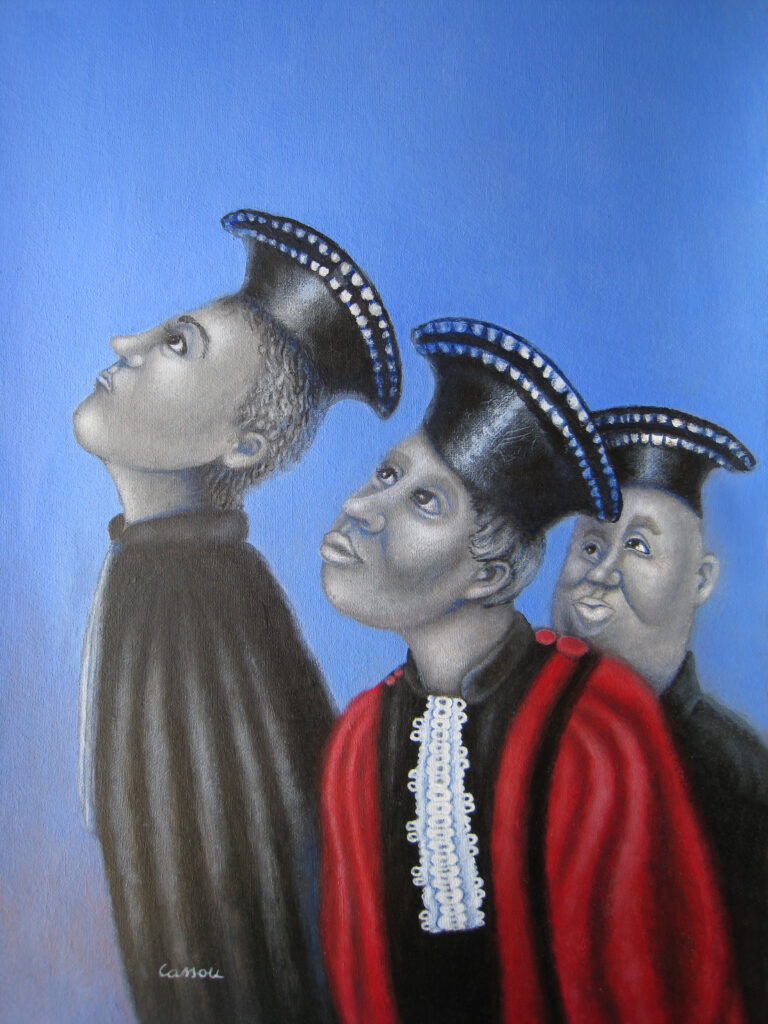
The humour stems from the complete disconnect between the supreme authority of the magistrates and their immediate physical cluelessness. The courtroom turns into classic slapstick comedy. The trio embodies the “absent-minded professor” trope, but in judicial robes. Looking up at the ceiling for a criminal who ran out the door transforms collegiality into a synchronized comedy routine. In this case, the humour lies in the triumph of action over written text. The law is excellent at judging the past, but completely blind to the elusive present. The trial goes on, but the defendant is already blocks away, leaving three majestic figures staring at the flies.
“Petits copains de classe”
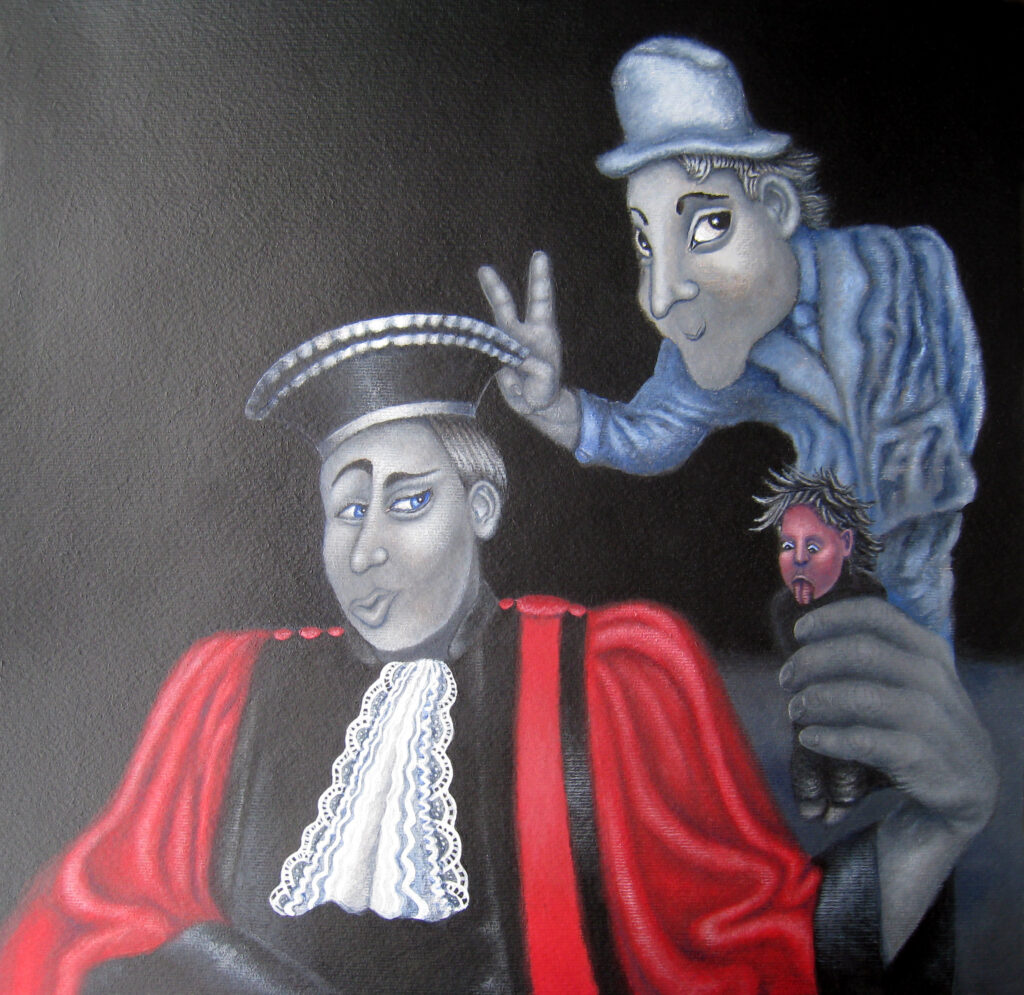
The humour here relies on the violent contrast between the crushing severity of judicial power and the childish, schoolyard behavior of the elites. The scales of justice are replaced by the rules of old-school friendships. The judge wields the absolute power of the Law not to serve justice, but to protect his “schoolbuddy.” The Penal Code is downgraded into a private tool for cronyism, turning the courtroom into an exclusive, corrupt boys’ club. While the judge literally crushes the victim, his friend playfully makes bunny ears with his hand. This ridiculous, immature gesture instantly destroys the dignity of the bench. In this case, the law wants to look majestic; it ends up looking absurd. The law is built on the sacred principle that “all citizens are equal before the law.” This scene questions that dogma by using dark humour to criticise corruption.
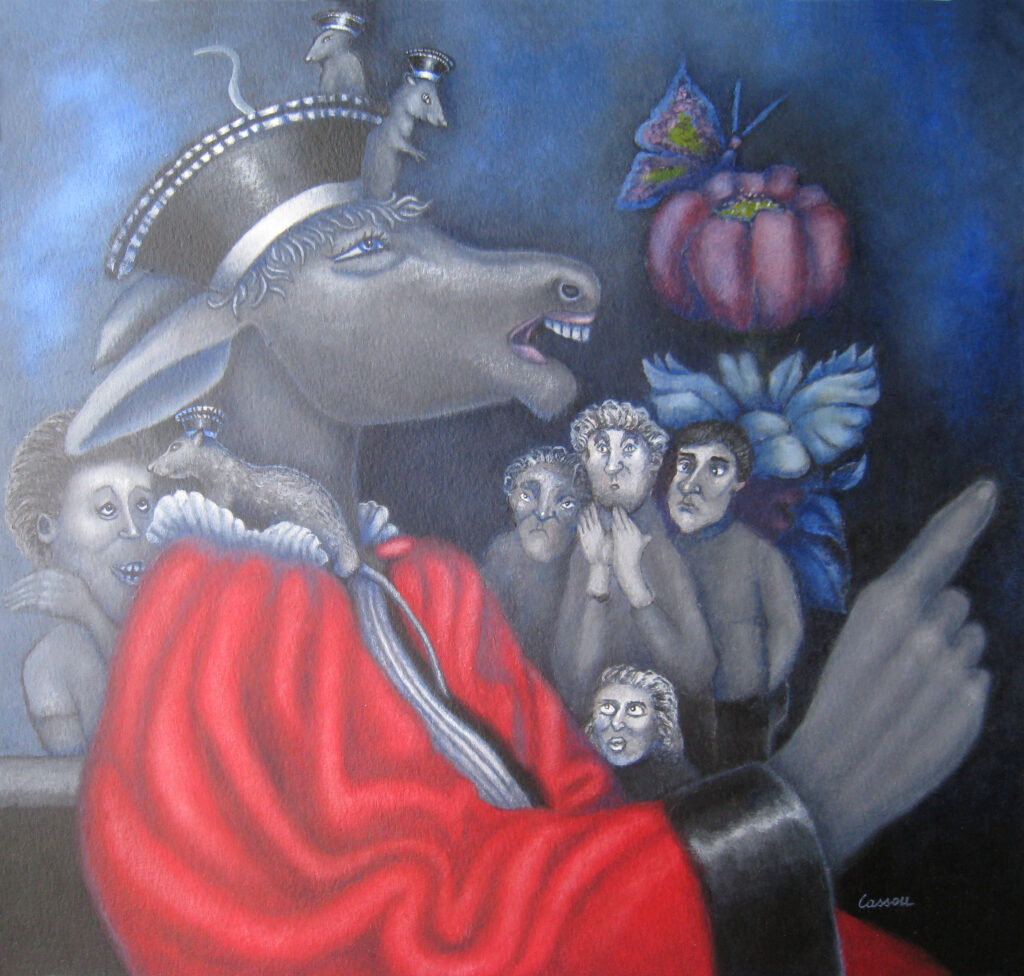
“L’Âne portant des Reliques”, fable juridique de La Fontaine
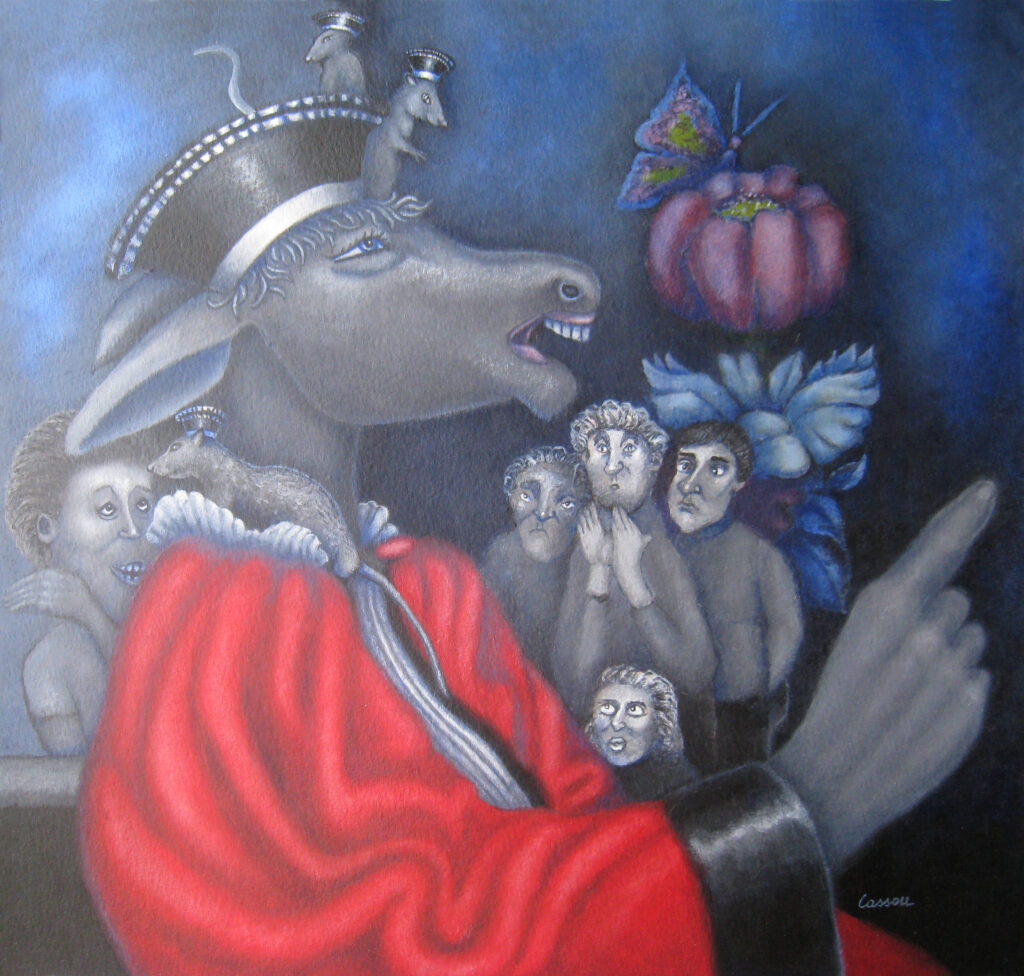
This illustration transposes La Fontaine’s fable The Ass Carrying Relics into a sharp satire of the legal system, targeting judicial vanity and legal theatre. Just like the fable’s donkey mistakes the worship of the relics for personal praise, this “ass-judge” believes the crowd is applauding his legal genius, not his official robes. The painting’s humour is based on this cognitive dissonance. The law demands respect, but the human executing it remains fundamentally flawed and vain. The outsider smiling on the left side, sharing a complicit gaze with the rats, acknowledges that the legal system is just a performance. By bypassing the pompous donkey to communicate with the literal rodents in the machine, the cynic highlights that the law is often run by imperfect actors rather than majestic figures.
” Angoisse et miséricorde “
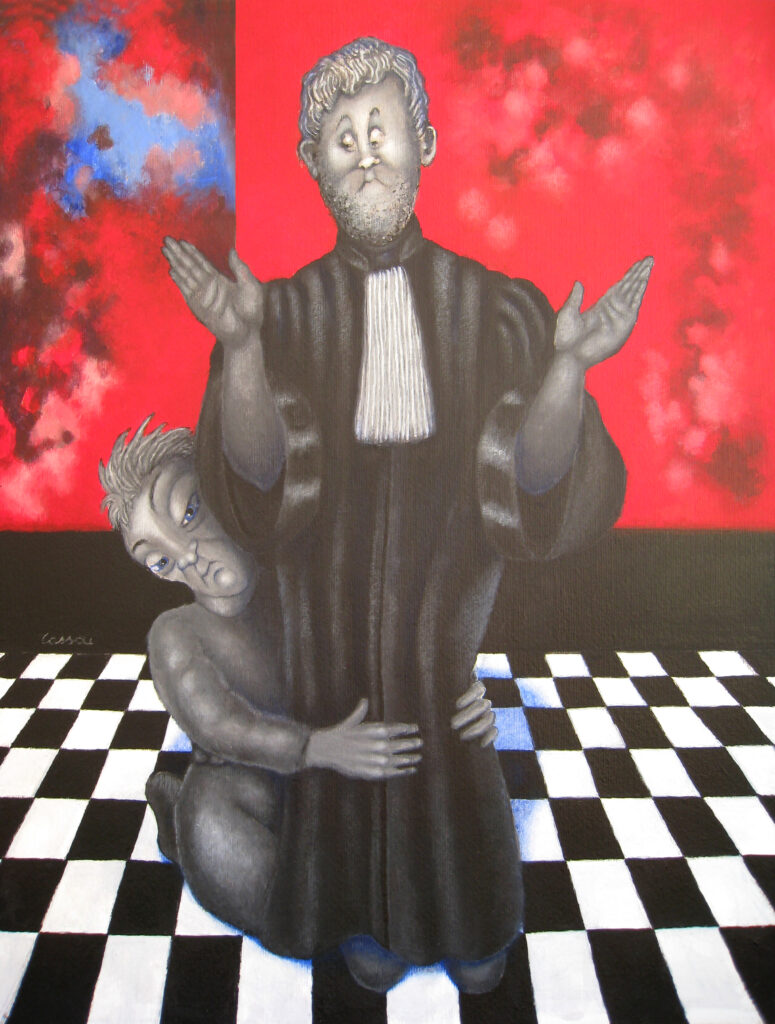
This commentary highlights the irony here where the sacredly religious and the secularly legal collide with biting humour. The primary comedic element stems from misappropriating liturgical codes within the legal world. By kneeling and clinging to the gown, the litigant is no longer looking for a legal technician, but a saviour. Legal distress (“anguish”) leads to the deification of the lawyer, transformed into the ultimate shield against damnation (conviction). The black gown becomes a sacred garment, almost endowed with magical powers, touched in hopes of a miracle or judicial immunity. The humour relies on the lawyer’s posture of openness and spiritual surrender, modeled after early Christians and a priest celebrating Mass. Spiritual surrender takes the place of legal arguments. The painting also mocks the theatricality of courtrooms, by equating legal pleading with a mystical prayer. The artwork reminds us that in times of crisis, law reverts to a matter of pure belief.
” Se frotte les mains “
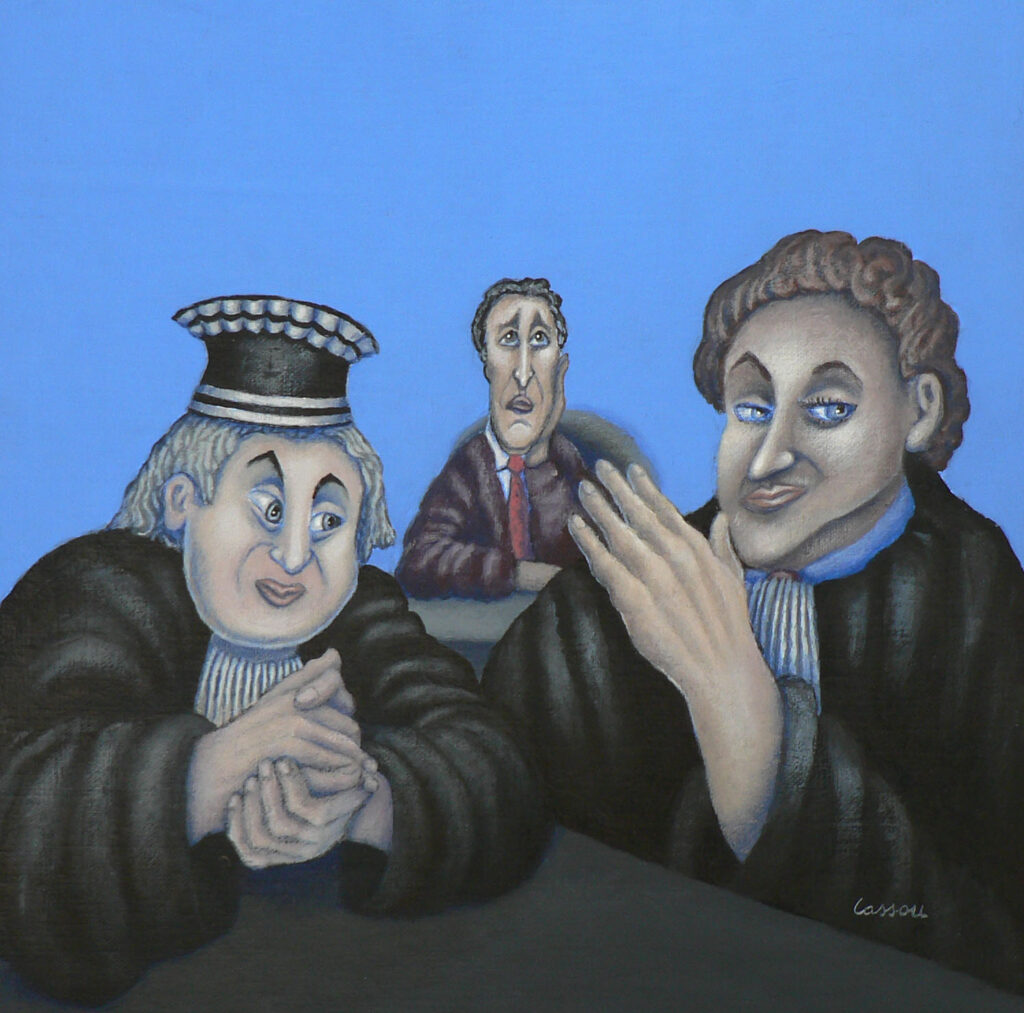
This illustration captures the psychological backstage of the courtroom with jubilant cynicism, mocking the supposed impartiality of justice. The magistrate’s central gesture is the comedic pivot of the entire artwork. Rubbing one’s hands together is the universal sign of a merchant about to close a profitable deal. Applied to a judge, this gesture completely strips the role of its sanctity. The magistrate is not weighing the law; he is anticipating the pleasure of a harsh sentence, a clever retort, or a procedural trap snapping shut. The humour results from the mismatch between the neutrality required by the law and the undisguised jubilation of the man under the robe, who is already savouring the verdict. Without meaning to, the lawyer feeds the judge’s appetite, creating a comedic duo where one agitates while the other enjoys the show. In short, I show that the courtroom is a theatre where the Law serves as the script, the lawyer as the actor, the judge as the food critic, and the client… as the menu of the day.